Showing posts with label Honesdale. Show all posts

Tuesday, January 25, 2011

NEPA Represented With Oscar Nods for Blue Valentine AND Gasland


Northeastern Pennsylvania was represented in the nominations for the 83rd Annual Academy Awards, announced this morning.

Michelle Williams received a well-deserved Oscar nomination for Best Actress for her role as Cindy in Blue Valentine, which was filmed in Scranton, Honesdale, and Carbondale.

In addition, Wayne County native Josh Fox was honored with an Academy Award nomination for Best Documentary Feature for his film Gasland (now available to borrow on DVD from Albright Memorial Library).

For a complete list of this year's Academy Award nominees, click here.

The 83rd Annual Academy Awards air live on Sunday night, February 27th on ABC.

Wednesday, April 15, 2009

Wild Boys of The Road (1933)


Be it consciously or unconsciously, director William Wellman frequently puts tracking shots of maps to show his characters' journeys in his pre-Code Hollywood films. By some coincidence, these maps tend to highlight Pennsylvania, with Scranton, Wilkes-Barre and Honesdale identified in big, bold print. He did it in 1933's Heroes for Sale, and he does it again in 1933's Wild Boys of the Road.

Wild Boys of the Road stars Frankie Darro, Edwin Phillips and Dorothy Coonan (who would marry director William Wellman after filming was completed) as everyday middle class teenagers hit with the realities of the Great Depression. As their parents lose their jobs, the teens no longer want to put financial burdens on their families. So they hop aboard a train and journey east to look for work. Along the way, they meet large groups of teens also facing the burdens of the Depression, and they set up makeshift communities at various stops, at the ire of local police and authority figures who run them off at every stop.

As the three make their way to New York and their dream of securing honest jobs, a map charts their journey---and, sure enough, there in big bold print on the screen, are the cities of Wilkes-Barre, Scranton, and Honesdale.

Unfortunately the Lackawanna County Library System does not have Wild Boys of the Road on DVD; if you'd like to see it, feel free to make a purchase request for Forbidden Hollywood: Volume 3 (which includes 5 other pre-Code films directed by William Wellman, including 1933's Heroes for Sale, which also references Scranton, Wilkes-Barre and Honesdale in a "map panning shot") by clicking here. However, the library does have the first volume of Forbidden Hollywood (featuring Jean Harlow in Red-Headed Woman, Mae Clarke in Waterloo Bridge, and Barbara Stanwyck in the shocking-even-by-today's-standards Baby Face); to place a hold, click here.

To purchase Forbidden Hollywood: Volume Three, click here.

On an interesting side note, William Wellman also directed 1945's Lady of Burlesque, which also features a reference to Wilkes-Barre.

Saturday, April 11, 2009

Michelle Williams and Ryan Gosling to Shoot New Film "Blue Valentine" in Honesdale; Open Casting Call Monday, April 13th from 1-8 PM

Hollywood is coming to Honesdale as Oscar nominees Michelle Williams (Brokeback Mountain, TV's Dawson's Creek) and Ryan Gosling (The Notebook, Half Nelson) will be in Wayne County (as well as other parts of PA) to shoot their new romantic comedy Blue Valentine, to be directed by Derek Cianfrance.

The film centers on a contemporary married couple, charting their evolution over a span of years by cross-cutting between time periods.

An open casting call, ranging from paid speaking parts to extras, will be held on Monday, April 13th at the Wayne County Visitor's Center, Commercial Street in Honesdale, from 1 PM - 8 PM. If you can't make it but would still like to be considered, you can email your information (name, age, photo, and contact information) to BlueValentineCasting@gmail.com

If you have any questions, you are asked to call the Casting Office at (212) 219-5094.

For more information about Blue Valentine and specific roles being cast, click here.

Much thanks to the fantastic Martina Soden for this information.

Wednesday, April 08, 2009

Heroes For Sale (1933)


A few years ago, Warner Bros. Home Video began releasing DVD box sets titled Forbidden Hollywood, excellent collections highlighting several classic and rarely seen films of the pre-Code Hollywood era (from both Warner. Bros. and MGM). From 1930-1934, before Hollywood began enforcing a self-imposed Production Code, many films allowed for extraordinary frankness including nudity, adultery, prostitution, drug addiction, and what some say was the glamorization of characters with no redeeming social value without punishment.

While watching the recently released third volume of Forbidden Hollywood (a collection of pre-Code films directed by the legendary William Wellman), I was happily surprised to see the words Scranton, Wilkes-Barre and Honesdale appear on the screen during a travel sequence in the film.

Heroes For Sale, starring Richard Barthelmess, Loretta Young, Gordon Westcott and Robert Barrat, was one of the first Hollywood films to deal head-on with the horrors of The Great Depression, and the overall theme of the film is that an honest man will always lose out in favor of a corrupt one.

Beginning in World War I, Heroes For Sale tells the tale of brave soldier Tom Holmes (Richard Barthelmess), who is captured by the enemy during battle when his Sergeant Roger Winston (Gordon Westcott) turns "yellow" and hides in a ditch. The coward Roger"earns" a medal of honor for bravery for turning in the enemy that Tom actually captured during gunfire, while Tom (now a POW) is badly hurt and is given heavy does of morphine by his captors.

Back at home, the drug-addicted Tom is working at a bank owned by the father of Roger, his former Sergeant. Though his work suffers, Tom remains honest and even refuses the temptation to steal from the bank to support his expensive habit. However, when called before the boss, Tom admits what really happened during wartime and that the medal Roger "earned" is rightfully his. To save face with his father, Roger calls Tom an insane drug addict and Tom is committed to an insane asylum to cure him of his addiction.

When released, a drug-free Tom moves to Chicago to start over. After getting a room at a boardinghouse above a restaurant, hegets a job as a salesman for a local laundry, where his honest dealings with his customers earn him a promotion. He also falls in love with his co-worker Ruth (Loretta Young), and they get married and have a son.

Also living in the boardinghouse is "crazy Red" Max (Robert Barrat), who believes in socialism, who yet becomes a tried-and-true Capitalist when his new invention is purchased for the laundry where Tom is now manager. The invention makes Max rich, but it also leads to mass layoffs, including one for Tom, at the laundry.

Tom is unwillingly carried off with the crowds of the now unemployed workers of the laundry. A riot break out, Tom's wife Ruth is killed in the stampede, and Tom is arrested and sentenced to five years in prison.

While Tom is in prison, Max's laundry invention becomes a standard across the country and Tom, an original investor, sees his bank account greatly expand while imprisoned. However, when he is finally released, the country is in the midst of the Great Depression. Tom donates all of his earnings on the invention to the restaurant (now a soup kitchen) below the boardinghouse where he once lived. However, the local police (and, ironically, Max the "crazy Red") accuse Tom of being a troublemaking Communist and run him out of town.

A map onscreen depicts Tom's (now a hobo) journey across the US to find work. As the map pans to Pennsylvania and Tom's destination of Harrisburg, the locations of Scranton, Wilkes-Barre and Honesdale are featured prominently on the screen.

The film concludes with Tom continuing his search for work, but now his fellow traveller is Roger, whose father's bank collapsed with the Stock Market Crash of 1929--leaving Roger a hobo himself.

Sadly, the existing version of Heroes For Sale is five minutes shorter than its original release version from 1933; the reason being that many pre-Code films--even those that were originally released with zero cuts--were required to make cuts to the films when they were eventually rereleased in theaters, and the 71 minute cut (as opposed to the 76 minute version) is all that exists today.

Unfortunately the Lackawanna County Library System does not have Heroes for Sale on DVD; if you'd like to see it, feel free to make a purchase request for Forbidden Hollywood: Volume 3 by clicking here. However, the library does have the first volume of Forbidden Hollywood (featuring Jean Harlow in Red-Headed Woman, Mae Clarke in Waterloo Bridge, and Barbara Stanwyck in the shocking-even-by-today's-standards Baby Face); to place a hold, click here.

To purchase Forbidden Hollywood: Volume Three, click here.

On an interesting side note, Wellman also directed 1945's Lady of Burlesque, which also features a reference to Wilkes-Barre.

Wednesday, April 23, 2008

Wet Hot American Summer (2002)


Me with four-time Emmy Winner (for his role as Niles on Frasier) and the 2007 Tony Winner for Best Actor in a Musical David Hyde Pierce after a performance of Curtains in New York City this past Saturday (April 19th, 2008). Pierce also starred in 2001's Wet Hot American Summer, which was filmed on location at Camp Towanda in Honesdale, PA.

In May and June of 2000, Hollywood came to Honesdale, PA, where an impressive cast set up camp (no pun intended) at Camp Towanda to film the comedy Wet Hot American Summer.

The film stars David Hyde Pierce (4x Emmy Winner for his role as Niles on Frasier, and a 2007 Tony Winner for Curtains), Janeane Garofalo (Reality Bites, The Truth About Cats & Dogs), Saturday Night Live alums Molly Shannon and Amy Poehler (from the upcoming comedy Baby Mama), Christopher Meloni (Law and Order: Special Victims Unit), Paul Rudd and Bradley Cooper--who, in 2006, starred together with Julia Roberts in Broadway's Three Days of Rain, which featured set designs by Wilkes-Barre native Santo Loquasto.

Wet Hot American Summer is set on the last day of Camp Firewood's 1981 season. It follows a group of counselors who are each trying to complete their unfinished business before the day ends, and it's everyone's last chance for romance, self-realization, and of course the Big Talent show.

Wet Hot American Summer was first shown at 4 sold-out screenings at the 2001 Sundance Film Festival. After playing at various film festivals throughout the US, the film was released theatrically on July 27, 2001. The film was also a hit on the midnight movie circuit in 2003 and 2004.

Click here to reserve the DVD of Wet Hot American Summer,

Tuesday, August 22, 2006

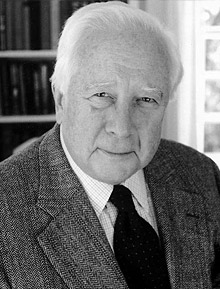
Mike Hill, Research Assistant to Author David McCullough (1776), Has A Local Connection


Norma Reese, one of my favorite patrons (and a true princess of local history), recently told me of a connection between Pulitzer Prize-winning author David McCullough (who will be speaking in Scranton as part of the Library Lecture Series in September) and Northeastern Pennsylvania.

Norma told me that the father of McCullough's research assistant Mike Hill was born in Honesdale, PA.

In addition to working with McCullough, Mr. Hill has also co-produced the PBS series The Civil War in 1990, as well as served as the coordinating producer of the PBS series Baseball. Click here to read more about Mike Hill.

Much thanks again to Norma for this reference.

Tuesday, November 08, 2005

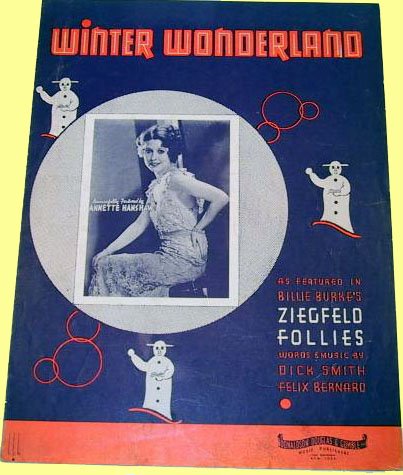
"Winter Wonderland" by Richard B. Smith (1934)


Sleighbells ring, are you listenin',
In the lane, snow is glistenin'
A beautiful sight,
We're happy tonight
Walkin' in a Winter Wonderland

Believe it or not, this classic holiday song that has been recorded thousands of times was written by a man from Honesdale who did not live to see his legacy and success.

Richard (Dick) B. Smith (1901-1935) attended Honesdale schools in Wayne County before enrolling at Penn State University, where he studied advertising, edited the college magazine and formed and conducted his own orchestra. Upon graduation, Smith moved to New York City and managed several theaters.

Smith became ill with tuberculosis in 1931 shortly after marrying the former Scrantonian Jean Connor. He was admitted to the West Mountain Sanatorium. While a patient (and his wife worked as a nurse at the same institution), he won first prize in a Maybelline Eye Shadow slogan contest ("The Eyes Have It") and started writing songs--including "When A Gypsy Makes A Violin Cry," "Bringing My Honey Back To Me," and, of course, the holiday perennial Winter Wonderland, which Smith wrote the lyric and Felix Bernard wrote the music.

Smith was only able to write songs for a little more than a year before he succumbed to the disease. He had accepted a contract to write music in Hollywood, but he died September 28th, 1935--one month before he was to go to California.

The song Winter Wonderland, for which Smith was mostly remembered, never made it to the top of the charts until eight years after his death. He is said to have written the song about the snow-laden trees of the Poconos, perhaps the trees in front of his family home at 922 Church Street in Honesdale, across from Central Park.

Today, Winter Wonderland could be found on hundreds of artists on hundreds (perhaps thousands) of holidays albums—from Ray Charles and Elvis Presley to Clay Aiken and the Eurythmics--to hundreds of other artists in every genre of music.

To hear Bing Crosby's rendition of Winter Wonderland, click here.

To read more about Winter Wonderland and Richard B. Smith, come to the Reference Department and ask to see the Local History Vertical File (LHVF) for "Music - Winter Wonderland." Posted by Picasa