Showing posts with label Academy Award. Show all posts

Saturday, July 06, 2013

Gasland Part II, Directed By Wayne County Native Josh Fox, To Premiere on HBO Monday, July 8th

Gasland Part II, directed by Emmy-winning and Oscar-nominated documentary filmmaker Josh Fox, will have its television premiere Monday, July 8th at 9 PM on HBO.

Fox is a native of Wayne County; his original 2010 documentary Gasland was a Academy Award nominee for Best Documentary Feature and won an Emmy Award winner in 2011 for Outstanding Directing for Nonfiction Programming.  

Monday, April 23, 2012

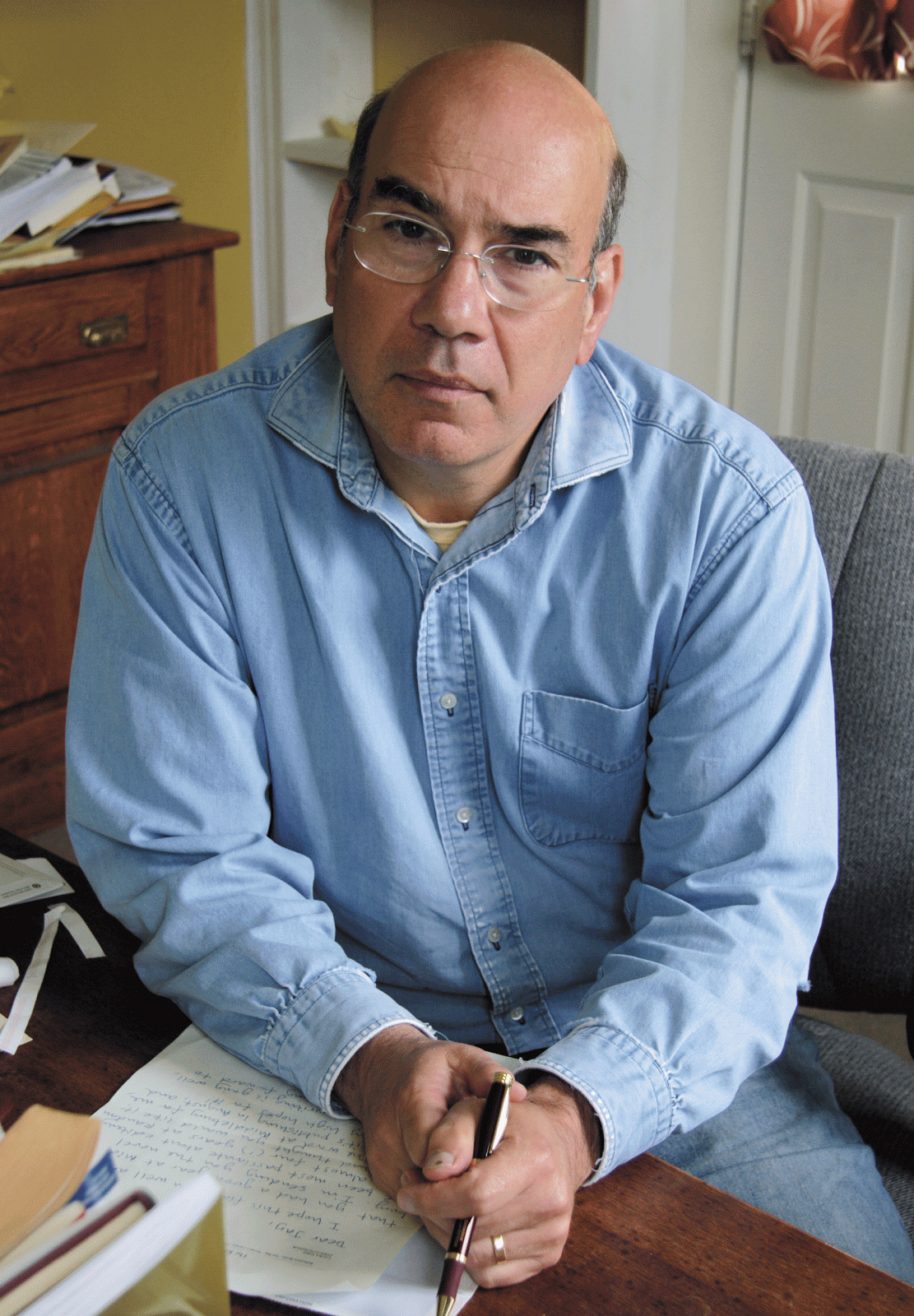
Jay Parini, Native of Pittston and Scranton, Will Receive University of Scranton Award in September

It has recently been announced that award-winning poet and author Jay Parini will receive the Royden B. Davis Distinguished Author Award from the Friends of the Weinberg Memorial Library at University of Scranton on Saturday, September 29th.  This is one of several planned events to celebrate the 20th anniversary of the Weinberg Memorial Library.

Novelist and poet Jay Parini was born in 1948 in Pittston, Pennsylvania and raised in Scranton.  His 1990 novel The Last Station was adapted into a 2009 Oscar nominated film starring Helen Mirren and Christopher Plummer.

Click here for more information. 

Tuesday, January 25, 2011

NEPA Represented With Oscar Nods for Blue Valentine AND Gasland


Northeastern Pennsylvania was represented in the nominations for the 83rd Annual Academy Awards, announced this morning.

Michelle Williams received a well-deserved Oscar nomination for Best Actress for her role as Cindy in Blue Valentine, which was filmed in Scranton, Honesdale, and Carbondale.

In addition, Wayne County native Josh Fox was honored with an Academy Award nomination for Best Documentary Feature for his film Gasland (now available to borrow on DVD from Albright Memorial Library).

For a complete list of this year's Academy Award nominees, click here.

The 83rd Annual Academy Awards air live on Sunday night, February 27th on ABC.

Wednesday, December 17, 2008

Kitty Foyle (1940)


Don McKeon, who has contributed many wonderful Scranton and Wilkes-Barre references to the blog, emailed me yesterday with a reference to the Pocono Mountains in the classic 1940 film Kitty Foyle, starring Ginger Rogers and Dennis Morgan:

"Hi Bill,
I'm not sure if I wrote this item in or maybe you have it already, but I was watching an old Ginger Rogers film the other night called Kitty Foyle and the Pocono Mountains are mentioned. This film was made in or around 1940 and I believe Ginger Rogers won an Academy Award for her performance (for Best Actress in a Leading Role).

The story originates in Philadelphia, where Kitty envies the "Main Line" way of life in comparison to her own. She falls in love with a Main Liner and eventually marries him, but the gap between their societal upbringing dooms the marriage.

Long story short, Kitty flees to New York and meets a doctor who falls in love with her. She agrees to marry him; but when her former husband comes back into her life, she faces the ultimate choice......................I won't spoil the ending.

Disregard this if you already are aware of of the film.

Merry Christmas.
Don"


Including Ginger Roger's Best Actress win, Kitty Foyle received a total of five Academy Award nominations, including Best Picture, Best Director (Sam Wood, who also directed 1935's A Night at the Opera with Old Forge and Scranton native Allan Jones), and Best Screenplay (Dalton Trumbo, who also went on to write Roman Holiday, Spartacus and Exodus).

Though the Lackawanna County Library System does not have the film in our collection, Kitty Foyle is available to purchase on DVD.

And a big thanks again to Don McKeon for not only this contribution, but for all of the references he gave me that I would otherwise be unaware of. You're the best, Don!

Wednesday, June 07, 2006

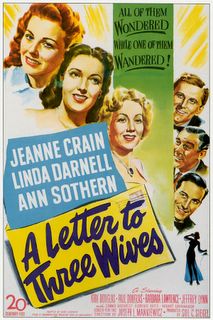
A Letter To Three Wives (1949)


My wonderful brother J.R. told me some time ago of a reference to the city of Wilkes-Barre in the 1949 Academy Award-winning film A Letter To Three Wives, written and directed by Joseph L. Mankiewicz.

Mankiewicz, who was born in Wilkes-Barre, also wrote the screenplay to All About Eve, which also included a reference to Wilkes-Barre in the dialogue (All About Eve was also the inaugural entry in this blog). Coincidentally, both A Letter To Three Wives (1949) and All About Eve (1950) won back-to-back Oscars for Best Screenplay (as well as Best Director) for Mankiewicz, the only such occurrence in the history of the Academy Awards. This distinction gives Wilkes-Barre, PA an ultra-rare (though unnoted until now) historic footnote in the history of cinema—city references included in two screenplays by the same author that won two consecutive Oscars.

Joseph L. Mankiewicz was born in Wilkes-Barre, PA on February 11, 1909. He began his career in film as a translator of intertitles for Paramount in Berlin. Upon returning to Hollywood, he worked as both a screenwriter and producer throughout the thirties and forties; he also produced several films starring Joan Crawford (including 1942's Reunion in France, which features several references to Wilkes-Barre). After directing his first film Backfire in 1946, Mankiewicz went on to direct such classics as The Ghost and Mrs. Muir, Now Way Out, Guys and Dolls, Cleopatra and, of course, All About Eve—which still holds the record of the most Academy Award nominations (14) in film history (tied with Titanic).

A Letter to Three Wives stars Jeanne Crain (State Fair, Cheaper By The Dozen), Linda Darnell (Mankiewicz’s No Way Out, Unfaithfully Yours) and Ann Sothern (Lady in the Lark, The Whales of August) as three friends in an affluent neighborhood. As they are boarding a ship to chaperone a school trip, a mailman delivers a letter addressed to the three of them from their friend (and town floozy) Addie Ross. Addie writes that she is leaving town for good and taking one of their husbands as a momento—neglecting to reveal exactly whose husband she stole. Though they display a brave front and a nonchalant attitude, each of the three women spends the day reminiscing about the ups and downs of her marriage -- wondering if hers is the husband who has flown the coop.

The Wilkes-Barre reference occurs during the flashback of “wife” Rita Phipps (played by Ann Sothern), a writer for radio shows. As she is having dinner with her possibly straying husband George (Kirk Douglas) and her radio show’s sponsors, a commercial for a breath mint begins playing during the radio show “Confessions of Brenda Brown.”

Announcer:

Euclid Street. Wilkes-Barre, Pennsylvania. What a thrill it was to hear my little girl say, “Mother, it’s much fun to have you read to us, now that you use Baby’s Breath.”

On the audio commentary on the DVD of A Letter To Three Wives (at 48:00), Joseph Mankiewicz's son Christopher explains that his father "never missed a chance in any screenplay that he wrote to pay homage to his city of birth and get it in the script."

A Letter to Three Wives is available for loan on DVD from the Lackawanna County Library System. To place a hold on the DVD, click here; to reserve the VHS, click here.

Much thanks again to my fantastic brother J.R. for this reference. Posted by Picasa

Saturday, April 01, 2006

Ned Washington, Songwriter (1901-1976)


"When You Wish Upon A Star" and "Give A Little Whistle" from 1940's "Pinocchio." Jazz standards such as “The Nearness Of You,” covered recently by Norah Jones, and “Wild Is The Wind” by Nina Simone. Pop classics like “A Town Without Pity.” The theme to TV’s "Rawhide.”

All of these songs were written by Scranton native Ned Washington (August 15, 1901-December 20, 1976).

Washington was born in Scranton on August 15, 1901, one of nine children. He attended Charles Sumner School in West Scranton and, later, Scranton Technical High School. He was a newspaperboy for the Scranton Times during his youth and also contributed poems to the local newspaper. Eventually, his family moved to Norfolk, Virginia, where he continued to publish his poems and stories in newspapers and even in national magazines.

Washington moved to New York in 1922. After working on the vaudeville circuit as a booking agent, master of ceremonies and occassional material writer, he moved to California in 1928. His first famous compostion for motion pictures (a collaboration with Herb Magidson) was "Singin' in the Bathtub."

Washington returned to New York 1930 and, for the next few years, worked as a freelance songwriter. His first standard, "I'm Gettin' Sentimental Over You," was recorded by Thomas Dorsey in 1932 and eventually became the theme song for his orchestra.

Washington returned to Hollywood in 1935 and continued writing songs for films for many years. He won two Academy Awards in 1940--the first for Best Original Score for Walt Disney's Pinocchio and the second for Best Original Song for "When You Wish Upon A Star." Washington won a third Oscar in 1952 for "Do Not Forsake Me," the theme to the classic Western "High Noon." Washington would eventually receive a total of 13 Academy Award nominations throughout his prolific career in Hollywood.

Other Washington notables are "Baby Mine" (introduced in Walt Disney's "Dumbo" and, in 1988, sung by Bette Midler in the classic tearjerker "Beaches"), "Stella By Starlight," "Smoke Rings" and the Billie Holiday standard "(I Don't Stand a) Ghost of a Chance."

Washington died at his Beverly Hills home on December 20, 1976 from a heart condtion; he was 75 years old. But for those who love movies and classic Disney, Washington's music and legacy will live on forever.

Disney inducted Washington into their Disney Legends Hall of Fame in 2001.

The Local History Vertical File for "Music" includes several articles on Ned Washington.

Monday, August 15, 2005

The Sopranos (2000) Season Two, Episode One


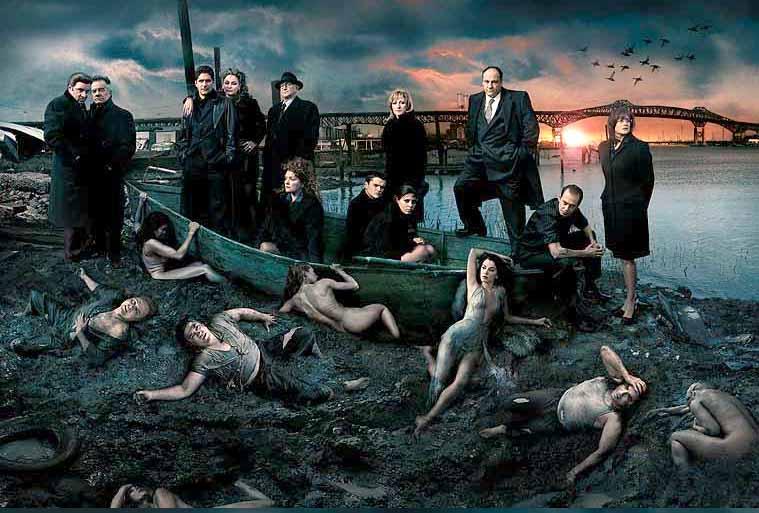
Our lovely district consultant Mary Yeager emailed me and told me of a mention of Scranton in the popular HBO series The Sopranos. The story centers on fictional Mafia man Tony Soprano and his relationships with his wife, his family, his associates, and his therapist. The first-rate cast includes James Gandolfini, Edie Falco and Lorraine Bracco.

The Scranton mention was in the first episode of the second season. The episode, titled "Guy Walks Into A Psychiatrist's Office," features a scene in which Philly "Spoons" Parisi (played by Dan Grimaldi) is picking up Tony Soprano (James Gandolfini) from the airport. The dialogue goes like this:

Spoons
So how's Boston?
*
Tony
Well, it was good to be back for a while, then, ya know.
*
Spoons
Do I?
*
Tony
That place is Scranton, with clams.
*
*
NOTE: Now I have never seen an episode of The Sopranos in my life. So if I have the scene or the characters wrong, please email us at refdept@albright.org and tell us.
*
Season Two of The Sopranos, featuring "Guy Walks into a Psychiatrist's Office" is available to borrow on DVD from the Lackawanna County Library System. To place a hold, click here.

Much thanks again to the lovely Mary Yeager for this entry.

Friday, July 29, 2005

All About Eve (1950)


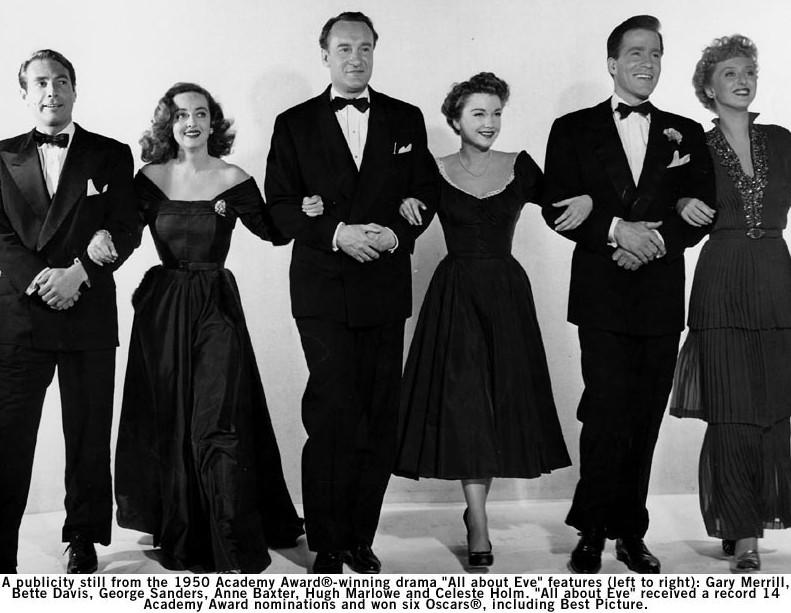
Ah, the classic 1950 Best Picture winner (tied with Titanic for the film with the most Academy Award nominations ever with 14).

The director, Joseph L. Mankiewicz, was born in Wilkes-Barre and has written and/or directed several classic movies, including Guys & Dolls, No Way Out, Cleopatra, and, of course, All About Eve.

Below is a section of dialogue, near the end of the film, in which Margo Channing (played by Bette Davis) mentions Wilkes-Barre:

MARGO

There goes Eve. Eve evil, Little Miss Evil. But the evil that men do - how does it go, groom? Something about the good they leave behind - I played it once in rep in Wilkes-Barre...

BILL

You've got it backwards. Even for Wilkes-Barre.

All About Eve, the film in VHS and DVD formats, and the original screenplay by Joseph L. Mankiewicz, is available to borrow from libraries throughout the Lackawanna County Library System. To place a hold on the DVD, click here; to reserve the VHS, click here. To reserve the original published screenplay by Wilkes-Barre native Joseph L. Mankiewicz, click here.